Showing posts with label renaissance dresses. Show all posts
Friday, April 26, 2013
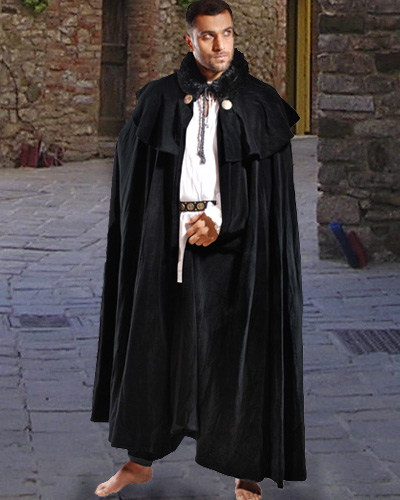
Interesting Facts About the Medieval Clothing
More and more people is interested in the Medieval clothing fashion now and they dress themselves in the Medieval style clothes. I will simply introduce some interesting facts about the Medieval clothing and you can have a reference if you are interested in this interesting topic.
Nobels and Peasants: Most people in the middle ages wore clothes made of wool or linen. While many peasants made their clothes at home, kings, queens and other members of nobility had their clothes made by tailors. The higher the quality of the material, the more prominent the people who wore the clothes. Kings, queens and other nobles adorned their clothing with jewels and intricately woven silk. Nobles were often distinguished by the longer length of their jackets. Wealthy men often wore hose and jackets with pleats or skirting during the latter part of the middle ages.
About religious orders: The holy order during the middle ages wore woolen habits that resembled the Roman style of clothing. Religious affiliation was distinguished by color. The Benedictines wore black and the Cistercians wore either undyed wool or white. The Poor Clare Sisters, which was an order of Franciscan nuns, petitioned the pope for permission to wear woolen socks.
About the women hair: Married women in the middle ages could be spotted easily. They wore tight caps or nets over their hair, which was fixed in a bun. Unmarried women could wear veils and have their hair hanging loose or braided.
About the Knights and Barbarians: Knights wore sleeveless surcoats decorated with a coat of arms. Barbarian nomads of the time wore simple clothing of wool, fur and sometimes leather (raw animal hide). They also wore trousers. Expensive leather was worn by knights and nobles. The rich often imported silk and turbans from the Far East.
c
Wednesday, April 17, 2013
Medieval Fashion and Medieval Clothing
Are you curious about the dressing style about the Medieval times? Well, medieval clothing can't be when compared to clothing that we have. In the modern times, practically anything can be purchased and worn provided the buyer has enough money. It was different throughout the medieval times particularly as the clothing people wear typically indicates their status inside the society. There are particular colors and farbicsreserved just for royalty. Same complements the peasantry. I will share some information about the Medieval fashion and Medieval clothing with you and you can have a reference if you are interested in that era dressing customes.
Tunics or loose-fitting garment were usually worn by men throughout the Middle Ages. Tunics could be either long-sleeved or sleeveless. How a tunic is worn might be unique to members of the specific social strata, generation or gender. For example, most men usually wear their tunics with their knees, monks and also the elderly and often wear their tunics to the ground. Likewise, kings, noblemen along with other members with the royalty wear their tunics exactly the same during special occasions. Members from the church for example friars wear cloaks with their feet with rope belts with beads that they use for prayers.
Pants which were in the Germans, were opposed from the Romans but were eventually used by the populace. They wore their pants underneath the tunics. Materials useful for pants were the same as the ones useful for the tunics.As for the women, they wear one or more tunic with their ankles. However, women usually do not wear pants. Instead, they'll use woven tights or socks on their legs. Nuns also wear tunics although they only use black and white variants. During the winter weather, wool cloaks were used. Knitting was not yet invented in those days and that's why woven tights were loose-fitting more often than not for this reason.
Subscribe to:
Posts (Atom)


