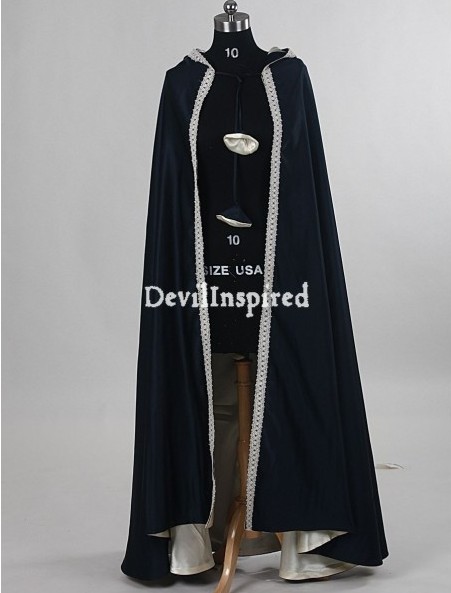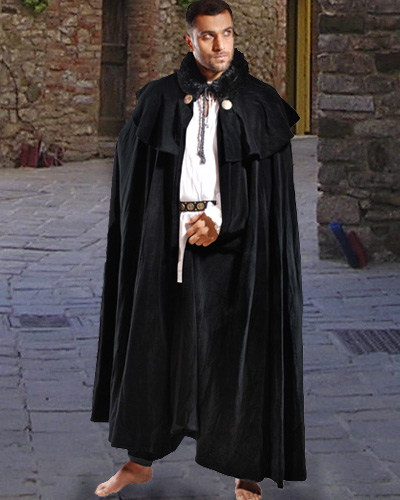
Showing posts with label Medieval clothing for men. Show all posts
Friday, April 26, 2013
Interesting Facts About the Medieval Clothing
More and more people is interested in the Medieval clothing fashion now and they dress themselves in the Medieval style clothes. I will simply introduce some interesting facts about the Medieval clothing and you can have a reference if you are interested in this interesting topic.
Nobels and Peasants: Most people in the middle ages wore clothes made of wool or linen. While many peasants made their clothes at home, kings, queens and other members of nobility had their clothes made by tailors. The higher the quality of the material, the more prominent the people who wore the clothes. Kings, queens and other nobles adorned their clothing with jewels and intricately woven silk. Nobles were often distinguished by the longer length of their jackets. Wealthy men often wore hose and jackets with pleats or skirting during the latter part of the middle ages.
About religious orders: The holy order during the middle ages wore woolen habits that resembled the Roman style of clothing. Religious affiliation was distinguished by color. The Benedictines wore black and the Cistercians wore either undyed wool or white. The Poor Clare Sisters, which was an order of Franciscan nuns, petitioned the pope for permission to wear woolen socks.
About the women hair: Married women in the middle ages could be spotted easily. They wore tight caps or nets over their hair, which was fixed in a bun. Unmarried women could wear veils and have their hair hanging loose or braided.
About the Knights and Barbarians: Knights wore sleeveless surcoats decorated with a coat of arms. Barbarian nomads of the time wore simple clothing of wool, fur and sometimes leather (raw animal hide). They also wore trousers. Expensive leather was worn by knights and nobles. The rich often imported silk and turbans from the Far East.
c
Monday, April 22, 2013
Culture of Medieval clothing
We all love Medieval Clothing; we love to flaunt them in some special occasions and our near and dear ones love to have these Medieval Clothes, Medieval Costumes and Medieval Dresses as gifts on special occasions such as birth days, New Year days and such other occasions.
Nowadays, whereas people have a common liking for the modern dresses, many love to wear fashionable medieval dress, medieval clothes, pirate costumes and renaissance clothing. Some designers even combine the medieval styles with the modern ones and create unique styles. Such a blending of the styles of two ages are loved by the youngsters and they will go to any extent to buy such blended products.
Today Medieval Dresses are getting more and more popular among the people of various ages. These medieval costume are sold out like hot cakes. But there are very few makers of such products. So whenever start selling these pirate clothing or renaissance costumes they become quite popular among the buyers. People say that old fashions die hard. Our old fashions live with us. We love to flaunt these fashions through our dresses. Wearing Medieval Clothing is one way of showing off our attachment with the old traditions and styles.
Sunday, April 21, 2013
Stylish and Elegant Medieval Costumes
Fashion continues to change with time. Throughout history, one can observe that fashion and trends of outfits have continuously changed. The medieval costumes are reputed for their bold design and styles. These costumes are inspired by the medieval era and are very popular for themed parties. These costumes are also in high demand for theatre performances and presentations related to the medieval times or various important events of that era. The medieval outfits and costumes are made with high quality materials. They have intricate detailing and embroideries that represent the fashion and trends of that time. I will share some information and you can have a reference if you are interested in this clothing fashion style.
The medieval outfits are available in many styles and designs. They are also presented in different sizes. Many online companies offer a wide range of exquisite medieval attires and outfits. The companies employ designers who are familiar with the different aspects of medieval fashion. Some online firms also offer suitable accessories like medieval jewelry, which can complete the look and appearance of the outfirt. The costumes are available in many elegant colors, and thus one can choose attires in colors or shades that one prefers. The costumes and outfits inspired by the medieval times look quite attractive and elegant.
Wednesday, April 17, 2013
Medieval Fashion and Medieval Clothing
Are you curious about the dressing style about the Medieval times? Well, medieval clothing can't be when compared to clothing that we have. In the modern times, practically anything can be purchased and worn provided the buyer has enough money. It was different throughout the medieval times particularly as the clothing people wear typically indicates their status inside the society. There are particular colors and farbicsreserved just for royalty. Same complements the peasantry. I will share some information about the Medieval fashion and Medieval clothing with you and you can have a reference if you are interested in that era dressing customes.
Tunics or loose-fitting garment were usually worn by men throughout the Middle Ages. Tunics could be either long-sleeved or sleeveless. How a tunic is worn might be unique to members of the specific social strata, generation or gender. For example, most men usually wear their tunics with their knees, monks and also the elderly and often wear their tunics to the ground. Likewise, kings, noblemen along with other members with the royalty wear their tunics exactly the same during special occasions. Members from the church for example friars wear cloaks with their feet with rope belts with beads that they use for prayers.
Pants which were in the Germans, were opposed from the Romans but were eventually used by the populace. They wore their pants underneath the tunics. Materials useful for pants were the same as the ones useful for the tunics.As for the women, they wear one or more tunic with their ankles. However, women usually do not wear pants. Instead, they'll use woven tights or socks on their legs. Nuns also wear tunics although they only use black and white variants. During the winter weather, wool cloaks were used. Knitting was not yet invented in those days and that's why woven tights were loose-fitting more often than not for this reason.
Monday, April 15, 2013
Medieval Clothing Introduction
More and more people are interested in Medieval clothing fashion now and they choose to wear Medieval clothing to express their fashion taste. If you are interested in Medieval clothing fashion and i think you will interested in my this article. I will introduce some Medieval clothing fashion information for you and you can have an reference if you are interested in this clothing fashion.
Medieval clothing was worn in several varieties. Poorer individuals often were forced to dress in the equivalent of nothing more than rags. A peasant in the medieval age, or worse yet the Dark Ages, often had to make do with just a few sparse robes or tunics. Wool was the most common material of the day, with scratchy undergarments the order of the day. Washing clothes, and bodies for that matter, was done only rarely. At the upper end of the economic scale, royalty often wore extravagant clothing to show off their status and wealth.
Upper scale medieval clothing was as much about showing off wealth as it was comfort. In fact, much medieval clothing of the royal variety was most likely very uncomfortable. Intended more as a display of wealth, royal medieval clothing was about showing off the latest styles and fashions. Long trains and elaborate jewelry typically complemented womens clothing of the time. The mens medieval clothing was often equally elaborate, featuring complex designs of fabric and colors.
If you have seen any of the modern reproductions of medieval clothing, common in movies such as Braveheart, this extravagant display of wealth through clothing is an easily recognizable feature of that time period. For poorer denizens of the medieval ages, clothing was much more about utility than comfort or style. At the opposite end of the spectrum, people in the royalty of the time focused on style much more than utility or even comfort. Styles changed just as frequently as it does today, or perhaps even more so.
Friday, April 12, 2013
Several Simple Steps Let You Have A medieval Garden
If you are Medieval fashion fan, i think you will be interested in learning anything about this fashion, from its clothing style to its garden designing. I will share some useful ideas on how to have a Medieval garden as the following and you can have a reference if you are interested in this fashion.
First, designing your garden with multipurpose functions in mind. There should be segregated areas for vegetables as well as culinary and medicinal herbs, an orchard and a spot for the gardener to sit in quiet contemplation.
Second, selecting plants that were available during the Medieval period. Plants mentioned in plays such as Hamlet (rue) or featured in paintings (apothecary rose, lavender) or songs such as Scarborough Fair (parsley, sage, rosemary and thyme) are good choices for a Medieval garden.
Third, building fencing around the edges of the garden. Medieval gardens didn't utilize decorative borders the way modern gardens do. Often the Medieval gardener had to contend with both domestic and wild animals. Borders were often constructed of wattle or board fencing. To create a wattle fence, drive sturdy willow sticks into the ground. Weave smaller, springier sticks around them for an authentic wattle fence look.
Friday, March 29, 2013
To Be An Mysterious Woman ------ Medieval Era
Every woman want to be mysterious like women in the Medieval era and they will try every methods to dress themselves look elegant and mature. In fact, I think you can have a try on the Medieval clothing style and you will have a perfect effect. I will share some simple information about the female dressing features of that era.
Women were very feminine in that era. About their dresses, they wore long dresses with big and flowing sleeves. The dresses included a corset that was tied tight to enhance the hourglass shape of a women. Queens and princesses wore vibrant-colored dresses. Many of them had detachable sleeves, bodices, belts and capes. The neckline of these dresses were often cut in a square to accent the bust of a women and then accentuated with bold necklaces.
About the common hairstyles, Many women in early medieval times covered their hair for religious reasons with caps and crowns or headdresses called wimples, according to Medieval Life and Times. Caps, cloches and hoods was used to complete the look.
Dressing yourself in the clothing features of that era and you will be the most mysterious and charming women.
Subscribe to:
Posts (Atom)


8MDFJ25U91.jpg)
4XB04IRHDNC(SK.jpg)

1WQMWMSHP%5DF%7DES%60458WW9.jpg)


EZ_%7BFPC8.jpg)