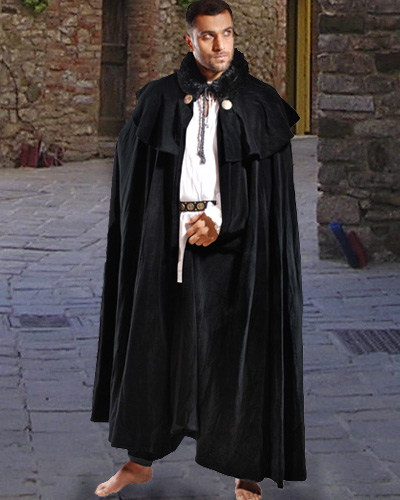
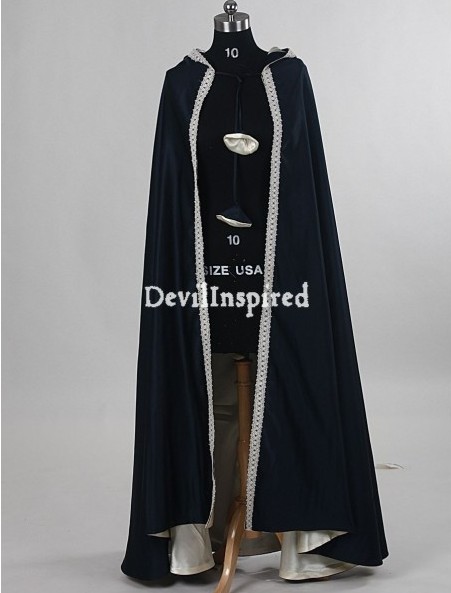
Showing posts with label medieval costume. Show all posts
Monday, May 6, 2013
Fashion Tips On Doing Your Medieval Make-up
If you are worrying about how to do your Medieval make-up and my article will help you solve your problems. Dressing up in medieval clothing can make for an elaborate costume, especially if you want to give the appearance of a person of consequence in medieval times. An attractive Medieval make-up is also of great importance. I will share some small tips on how to do your Medieval make-up and you can have a reference if you are interested in this fashion topic.
First, Pin any bangs up and away from the face to enhance the height of your forehead.Rub a pale shade of skin foundation makeup into your skin. Cover any skin that will be showing including face, ears, neck, upper chest and arms. You may also rub some foundation into your eyebrows and hairline to exaggerate the pale look of your face.
Second, Redden your lips with ruby red lipstick. Use a lipstick with very little shine. Do not exaggerate the contours of your lips.
Last, Rub a small circle of red lipstick onto your cheeks. This look is optional and was less likely to be used by the upper classes in medieval times.
Friday, April 26, 2013
Interesting Facts About the Medieval Clothing
More and more people is interested in the Medieval clothing fashion now and they dress themselves in the Medieval style clothes. I will simply introduce some interesting facts about the Medieval clothing and you can have a reference if you are interested in this interesting topic.
Nobels and Peasants: Most people in the middle ages wore clothes made of wool or linen. While many peasants made their clothes at home, kings, queens and other members of nobility had their clothes made by tailors. The higher the quality of the material, the more prominent the people who wore the clothes. Kings, queens and other nobles adorned their clothing with jewels and intricately woven silk. Nobles were often distinguished by the longer length of their jackets. Wealthy men often wore hose and jackets with pleats or skirting during the latter part of the middle ages.
About religious orders: The holy order during the middle ages wore woolen habits that resembled the Roman style of clothing. Religious affiliation was distinguished by color. The Benedictines wore black and the Cistercians wore either undyed wool or white. The Poor Clare Sisters, which was an order of Franciscan nuns, petitioned the pope for permission to wear woolen socks.
About the women hair: Married women in the middle ages could be spotted easily. They wore tight caps or nets over their hair, which was fixed in a bun. Unmarried women could wear veils and have their hair hanging loose or braided.
About the Knights and Barbarians: Knights wore sleeveless surcoats decorated with a coat of arms. Barbarian nomads of the time wore simple clothing of wool, fur and sometimes leather (raw animal hide). They also wore trousers. Expensive leather was worn by knights and nobles. The rich often imported silk and turbans from the Far East.
c
Friday, April 12, 2013
Several Simple Steps Let You Have A medieval Garden
If you are Medieval fashion fan, i think you will be interested in learning anything about this fashion, from its clothing style to its garden designing. I will share some useful ideas on how to have a Medieval garden as the following and you can have a reference if you are interested in this fashion.
First, designing your garden with multipurpose functions in mind. There should be segregated areas for vegetables as well as culinary and medicinal herbs, an orchard and a spot for the gardener to sit in quiet contemplation.
Second, selecting plants that were available during the Medieval period. Plants mentioned in plays such as Hamlet (rue) or featured in paintings (apothecary rose, lavender) or songs such as Scarborough Fair (parsley, sage, rosemary and thyme) are good choices for a Medieval garden.
Third, building fencing around the edges of the garden. Medieval gardens didn't utilize decorative borders the way modern gardens do. Often the Medieval gardener had to contend with both domestic and wild animals. Borders were often constructed of wattle or board fencing. To create a wattle fence, drive sturdy willow sticks into the ground. Weave smaller, springier sticks around them for an authentic wattle fence look.
Subscribe to:
Posts (Atom)