Showing posts with label Medieval outfits. Show all posts
Thursday, May 2, 2013
Veils for Medieval Women
During the medieval period, women usually wore more than one layer of clothing at a time and accompanied their ensembles with a veil. A common medieval veil popularized in pop culture is the "nifel," a tall conical hat with a veil attached to the top point, but women wore many different styles of veils. According to costume retailer Medieval Women's Clothing, married women wore their hair in a tight, netted bun beneath a tight-fitting cap with an affixed veil. Single women would either wear their hair down or in loose braids beneath a loose veil. I will simply introduce some information about the veils for the Medieval women and you can have a reference if you are interested in this fashion topic.
About the couvre chef: The couvre chef was a veil first worn by French women during the medieval period. Couvre chef is French for "cover head." The veil was worn at the top of the head with various head pieces and draped down the shoulders. Couvre chefs were generally made of delicate fabrics, such as silk in light colors, and wealthy women would have their couvrechefs embroidered with gold or jewels. Anglo-Saxons sometimes referred to the couvre chef as a "headrail." By the 15th century, couvrechefs became less fashionable, though they were still regularly worn by women in the lower classes.
About the Goffered veil: The goffered veil, also known as a nebula headdress, was worn by women of all classes. The goffered veil is a short, ruffled veil that was usually made from linen and crafted with ornate pleats or embroidered latticework on the edges. The veil was worn pinned near the hairline and draped over the top of the head, and can be found in many famous paintings of the period, including "Portrait of Margareta Van Eyck."
Friday, April 26, 2013
Interesting Facts About the Medieval Clothing
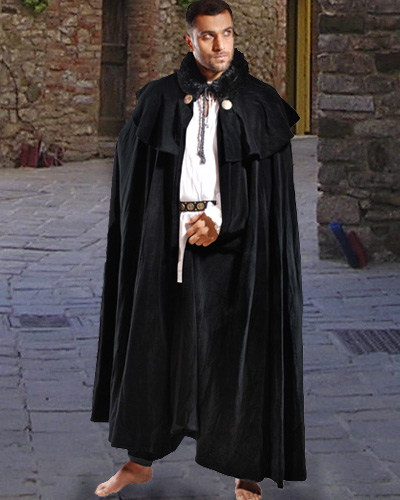
More and more people is interested in the Medieval clothing fashion now and they dress themselves in the Medieval style clothes. I will simply introduce some interesting facts about the Medieval clothing and you can have a reference if you are interested in this interesting topic.
Nobels and Peasants: Most people in the middle ages wore clothes made of wool or linen. While many peasants made their clothes at home, kings, queens and other members of nobility had their clothes made by tailors. The higher the quality of the material, the more prominent the people who wore the clothes. Kings, queens and other nobles adorned their clothing with jewels and intricately woven silk. Nobles were often distinguished by the longer length of their jackets. Wealthy men often wore hose and jackets with pleats or skirting during the latter part of the middle ages.
About religious orders: The holy order during the middle ages wore woolen habits that resembled the Roman style of clothing. Religious affiliation was distinguished by color. The Benedictines wore black and the Cistercians wore either undyed wool or white. The Poor Clare Sisters, which was an order of Franciscan nuns, petitioned the pope for permission to wear woolen socks.
About the women hair: Married women in the middle ages could be spotted easily. They wore tight caps or nets over their hair, which was fixed in a bun. Unmarried women could wear veils and have their hair hanging loose or braided.
About the Knights and Barbarians: Knights wore sleeveless surcoats decorated with a coat of arms. Barbarian nomads of the time wore simple clothing of wool, fur and sometimes leather (raw animal hide). They also wore trousers. Expensive leather was worn by knights and nobles. The rich often imported silk and turbans from the Far East.
c
Monday, April 22, 2013
Culture of Medieval clothing
We all love Medieval Clothing; we love to flaunt them in some special occasions and our near and dear ones love to have these Medieval Clothes, Medieval Costumes and Medieval Dresses as gifts on special occasions such as birth days, New Year days and such other occasions.
Nowadays, whereas people have a common liking for the modern dresses, many love to wear fashionable medieval dress, medieval clothes, pirate costumes and renaissance clothing. Some designers even combine the medieval styles with the modern ones and create unique styles. Such a blending of the styles of two ages are loved by the youngsters and they will go to any extent to buy such blended products.
Today Medieval Dresses are getting more and more popular among the people of various ages. These medieval costume are sold out like hot cakes. But there are very few makers of such products. So whenever start selling these pirate clothing or renaissance costumes they become quite popular among the buyers. People say that old fashions die hard. Our old fashions live with us. We love to flaunt these fashions through our dresses. Wearing Medieval Clothing is one way of showing off our attachment with the old traditions and styles.
Subscribe to:
Posts (Atom)


8MDFJ25U91.jpg)
4XB04IRHDNC(SK.jpg)